Running the 38 Mile Zion Traverse in A Day: Raising the Bar for What Feels Hard
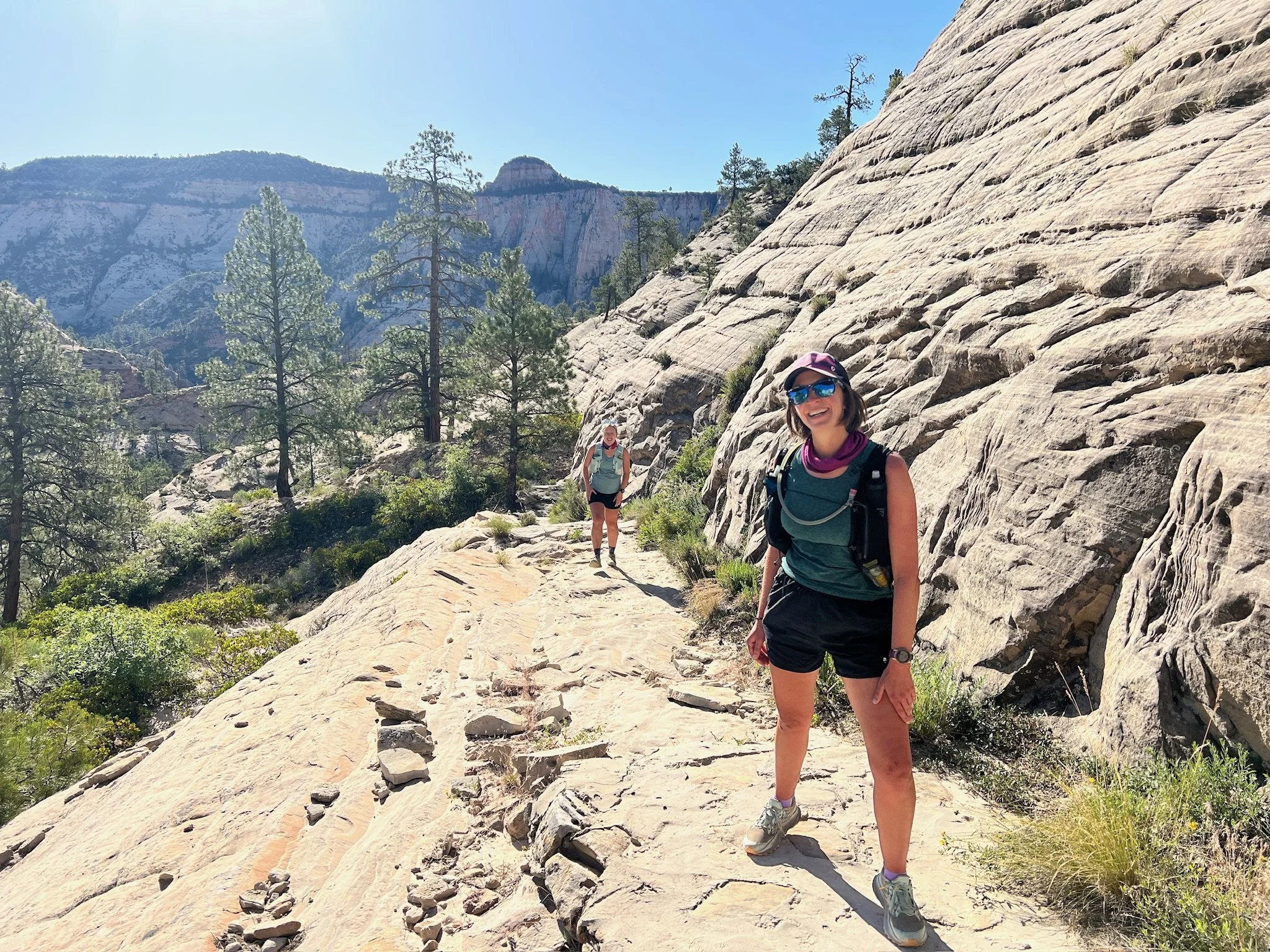
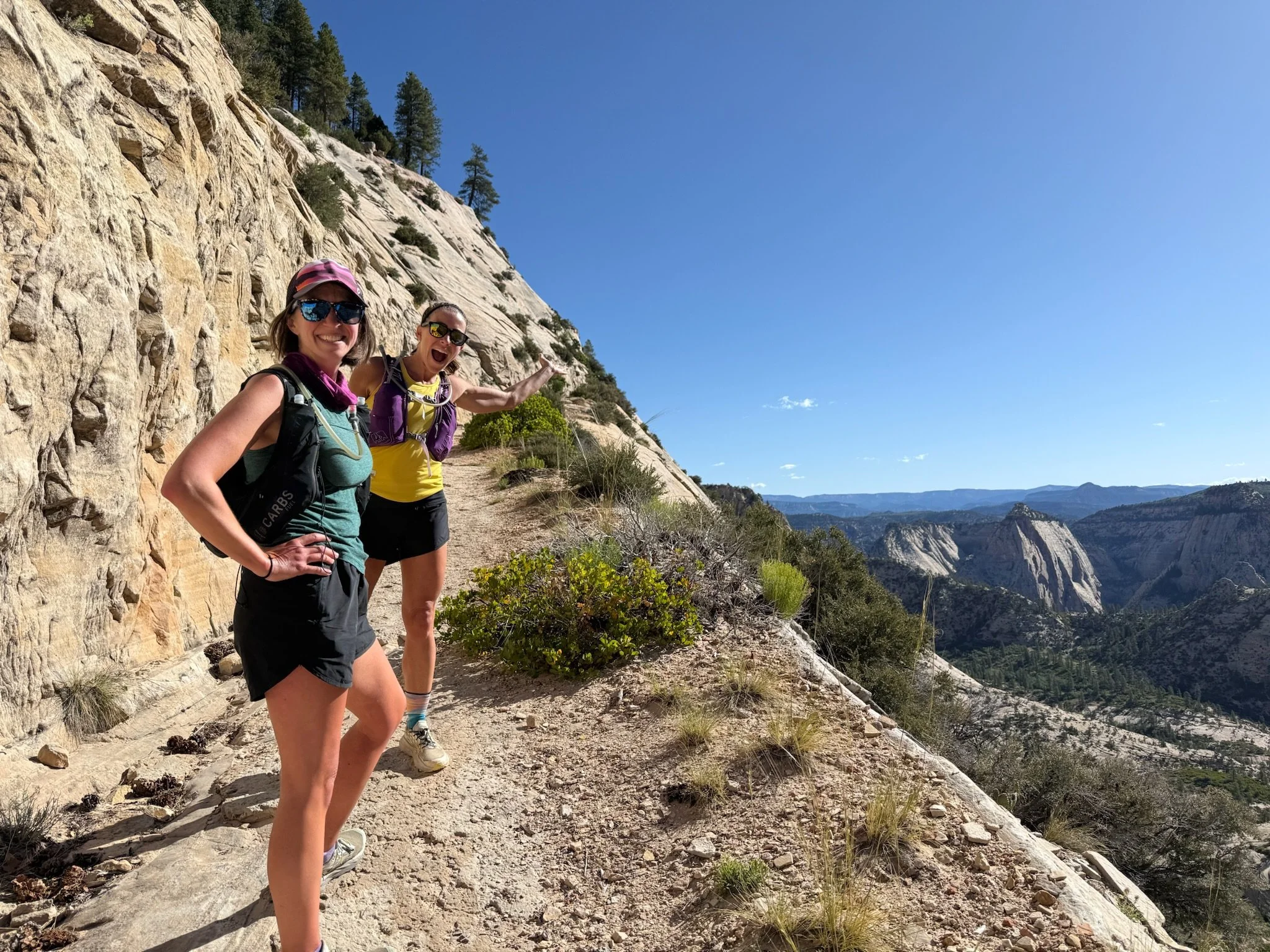
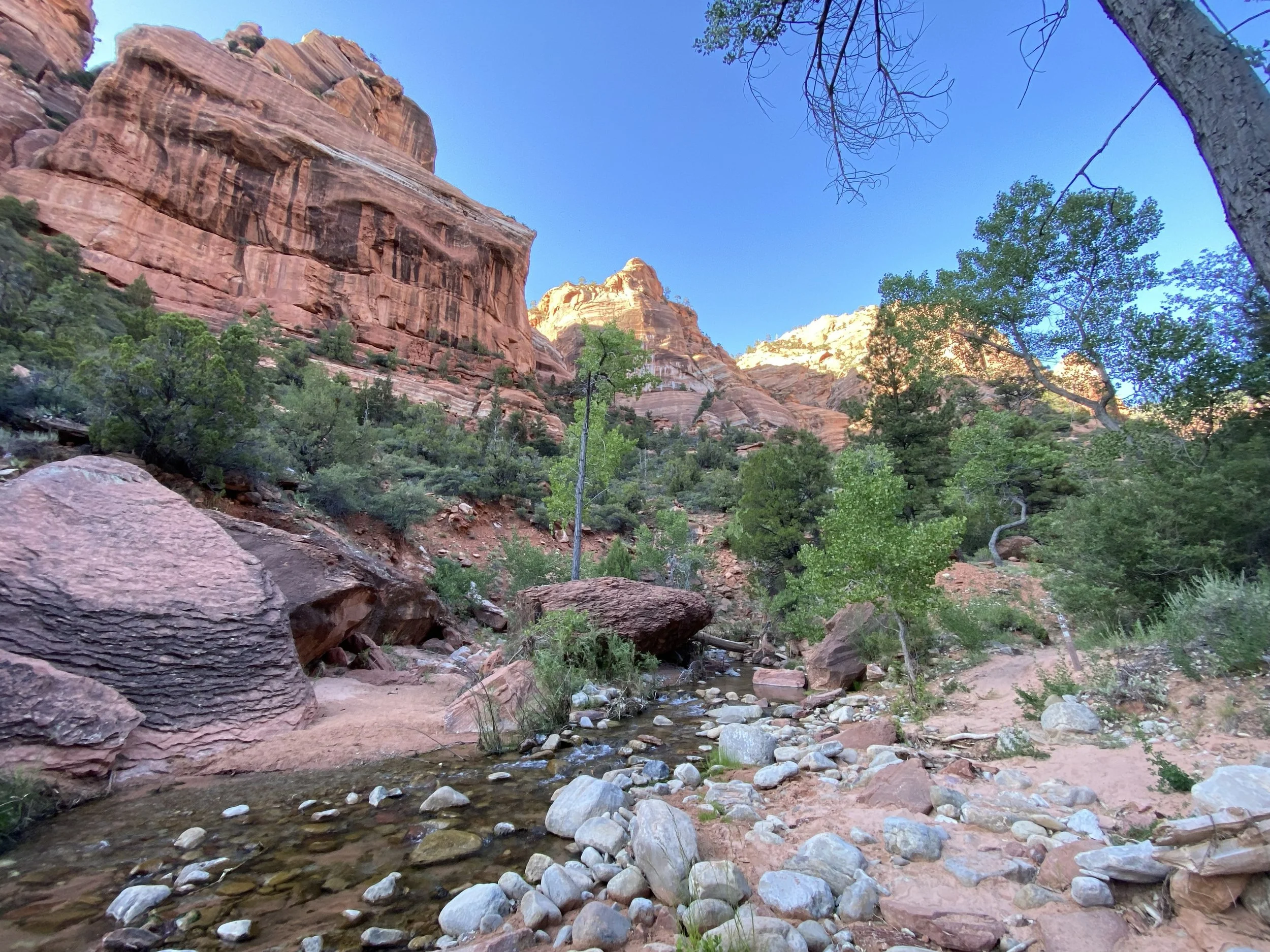
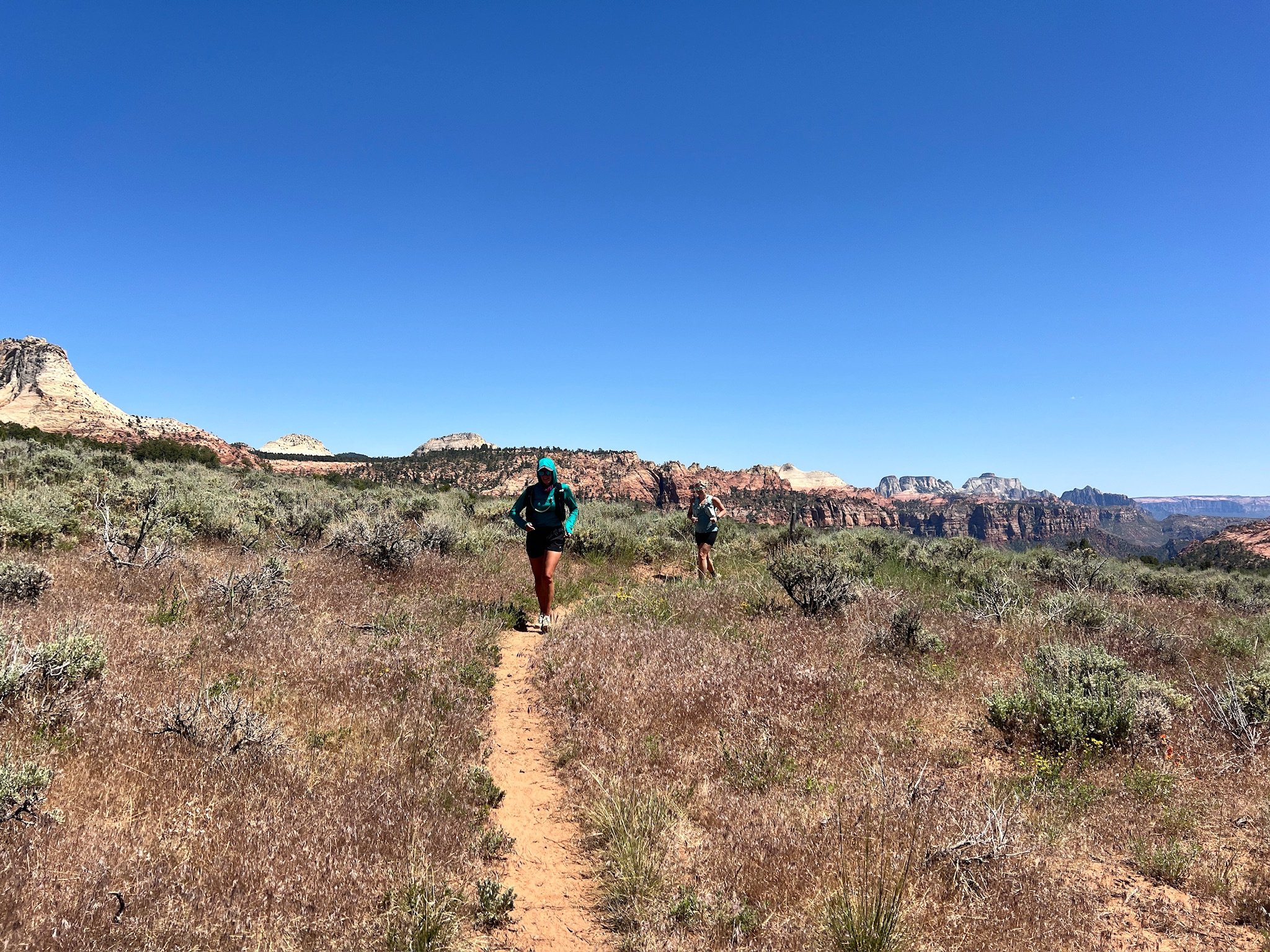
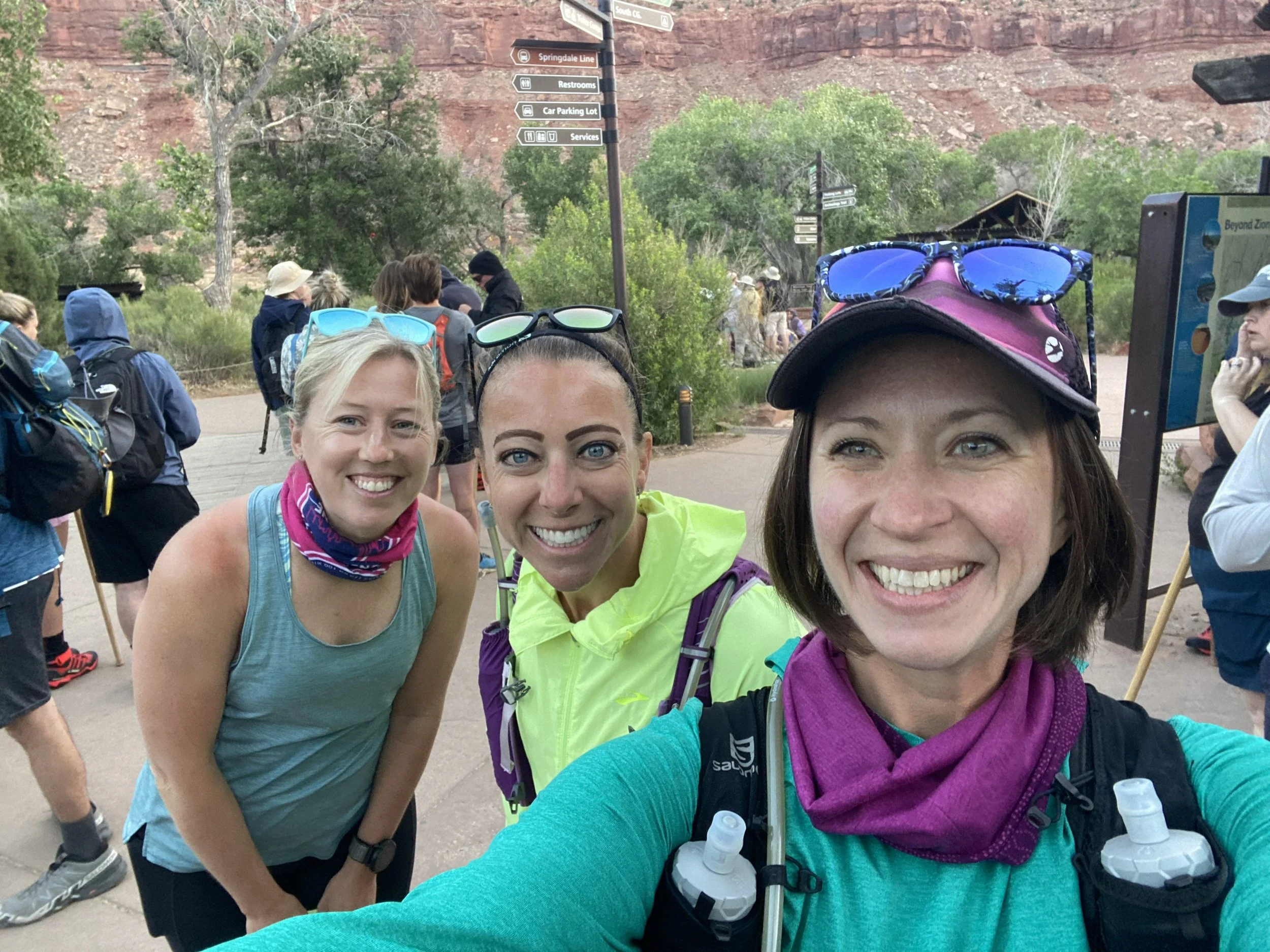
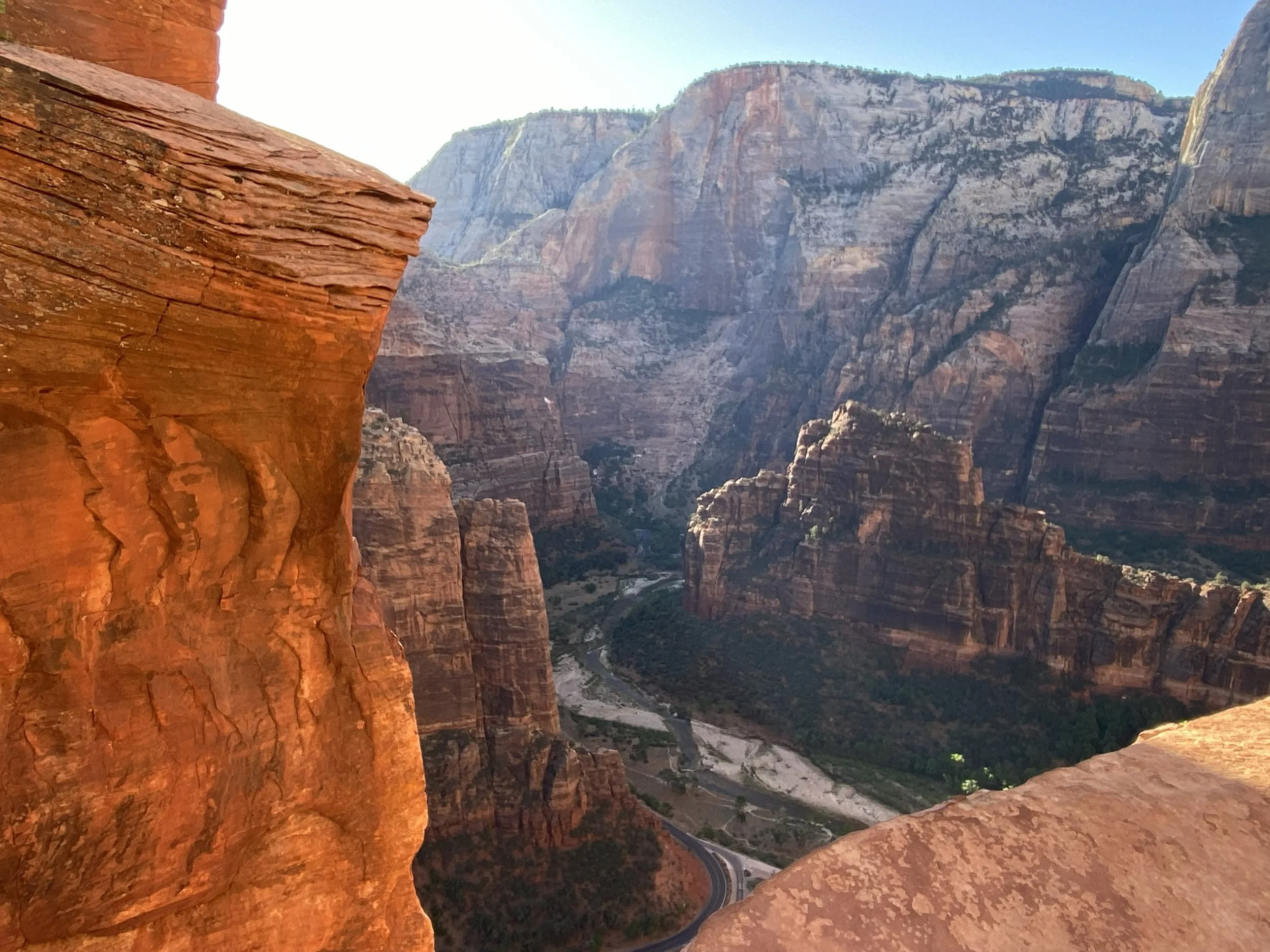
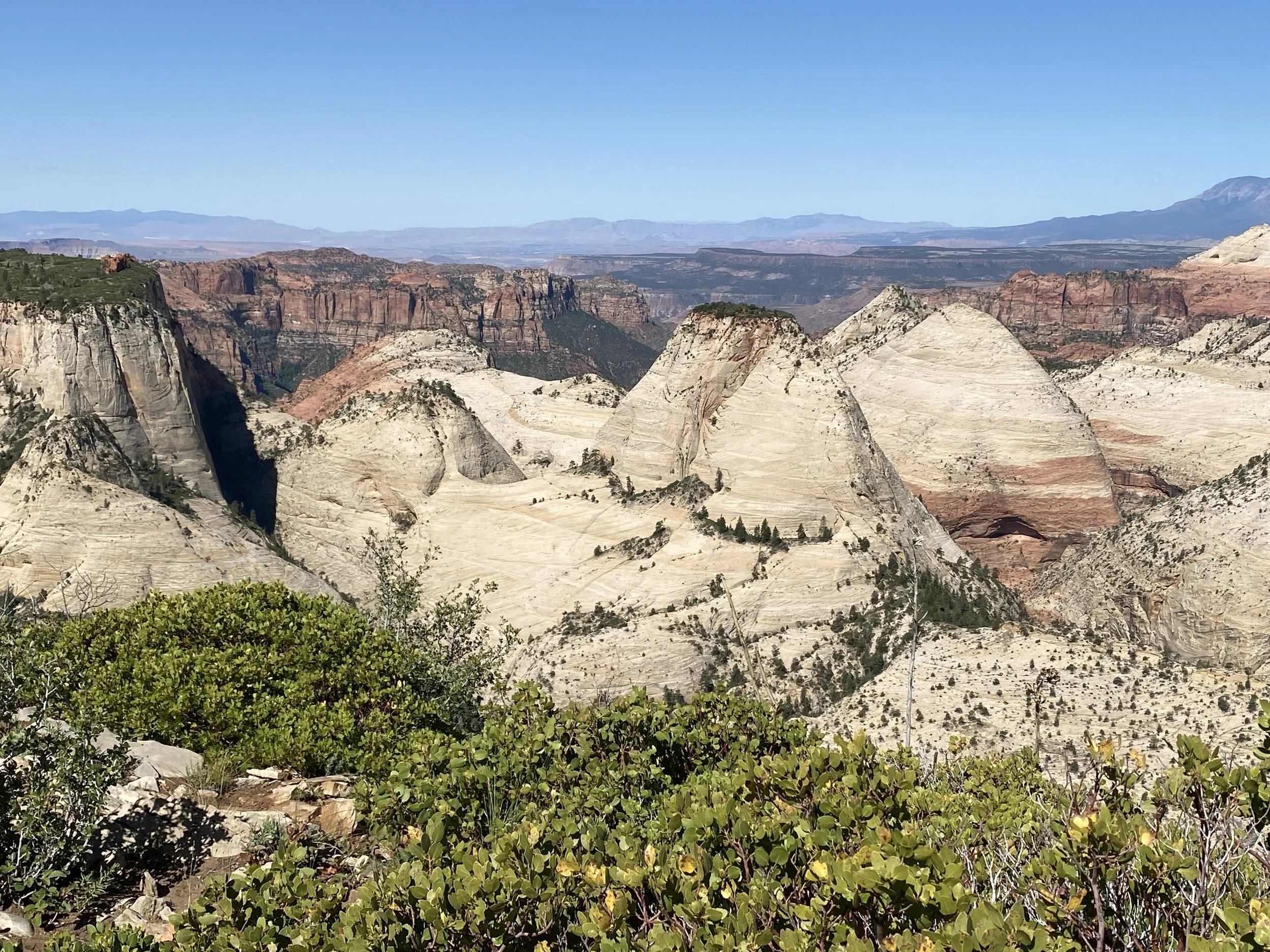
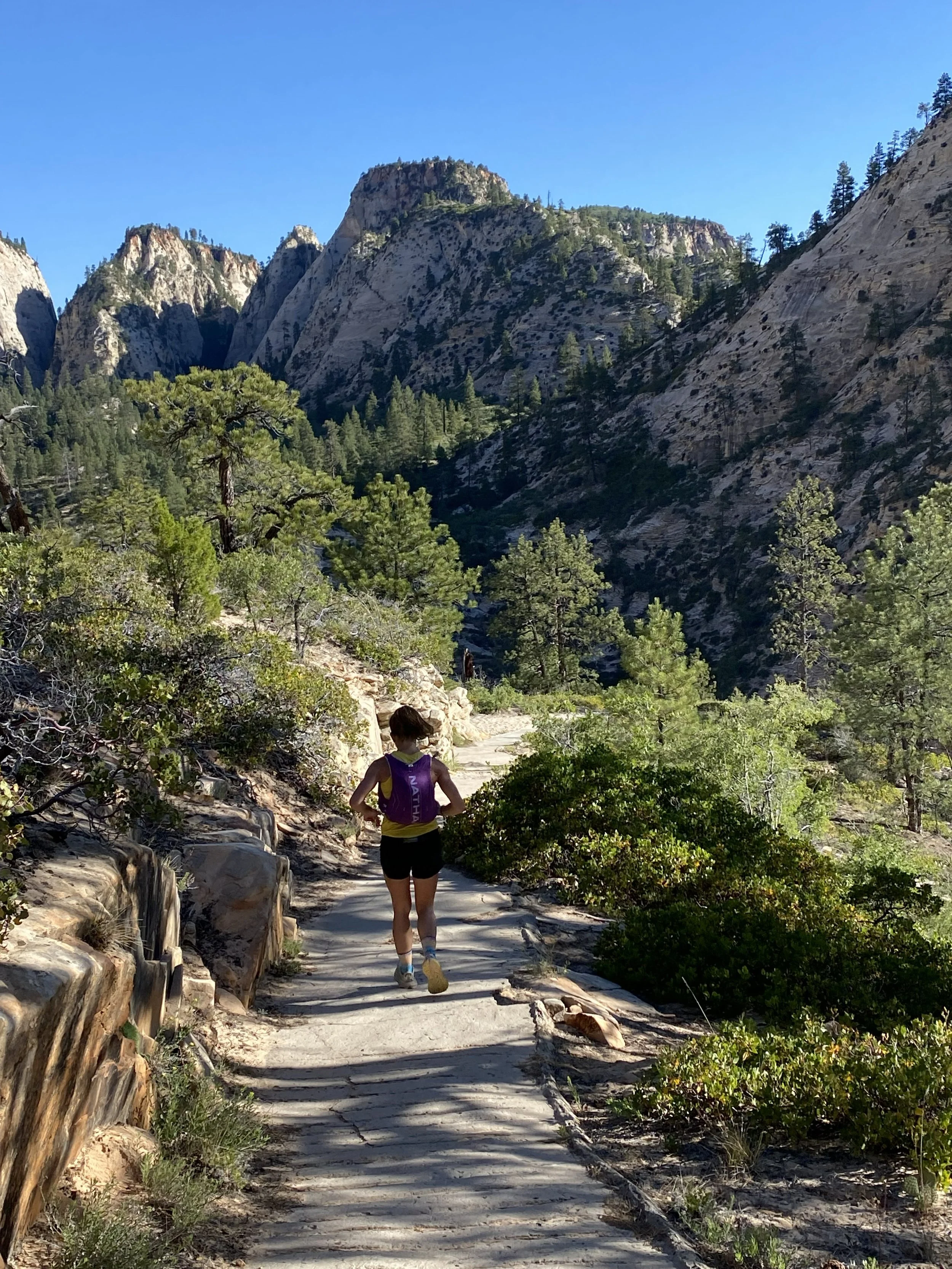
Last week, I had the privilege of running across Zion National Park with two of my best running friends. The Zion Traverse was previously closer to 50 miles, but a rock slide a few years ago permanently closed the eastern section of trail – shortening the route to just shy of an easy, breezy 38 miles. The route intersects the entirety of the western section of the park.
We ran east-to-west (the less popular option, as it requires significantly more climbing – 7000 feet vs 5000 ft), as our group preferred to avoid chasing visitor center shuttle cutoff times on the eastern side of the park. The shuttle stops running around 8pm, and missing the last shuttle would mean that the only way to get back to the main entrance would be running another five miles on pavement (yuck). Running in the east-to-west direction meant that we could park directly at our terminus point, and it also gave us a shorter drive back to our AirBnb in St. George.
Zion National Park holds a special place in my heart, as it was the first place I went backpacking back in 2013. The trip itself was borderline disaster – triple digit heat and exceptionally heavy packs laden with water made for brutally slow and uncomfortable miles. Despite the discomfort, I’ll never forget the tranquility of waking up in a shaded canyon and wandering across slickrock to greet the first light of day. The trip inspired what has become a lifelong passion: journeying to beautiful places on foot, whether running, hiking, or backpacking.
It’s adventure time
Our day of adventure began at 3:50am, and we rolled up to our trailhead at 5:25am. We booked a private shuttle with Red Rock Shuttle to get us to the start, and our awesome driver Justin delivered us to the main entrance of the park in Springdale at 6:30 (regaling us with tales of the geologic history all the way). The line for the park shuttle (which started running at 7:00am) was already about 50 people deep, and continued to grow exponentially with each passing minute. It was a surreal experience to be immersed in such a big crowd, knowing that we would see hardly another soul for most of the day.
After snapping a few selfies at the Grotto Trailhead sign, we began our adventure. The trail climbs 3000 ft right away, and my “live at sea level” lungs felt every bit of the altitude as we climbed up and over 7000ft.
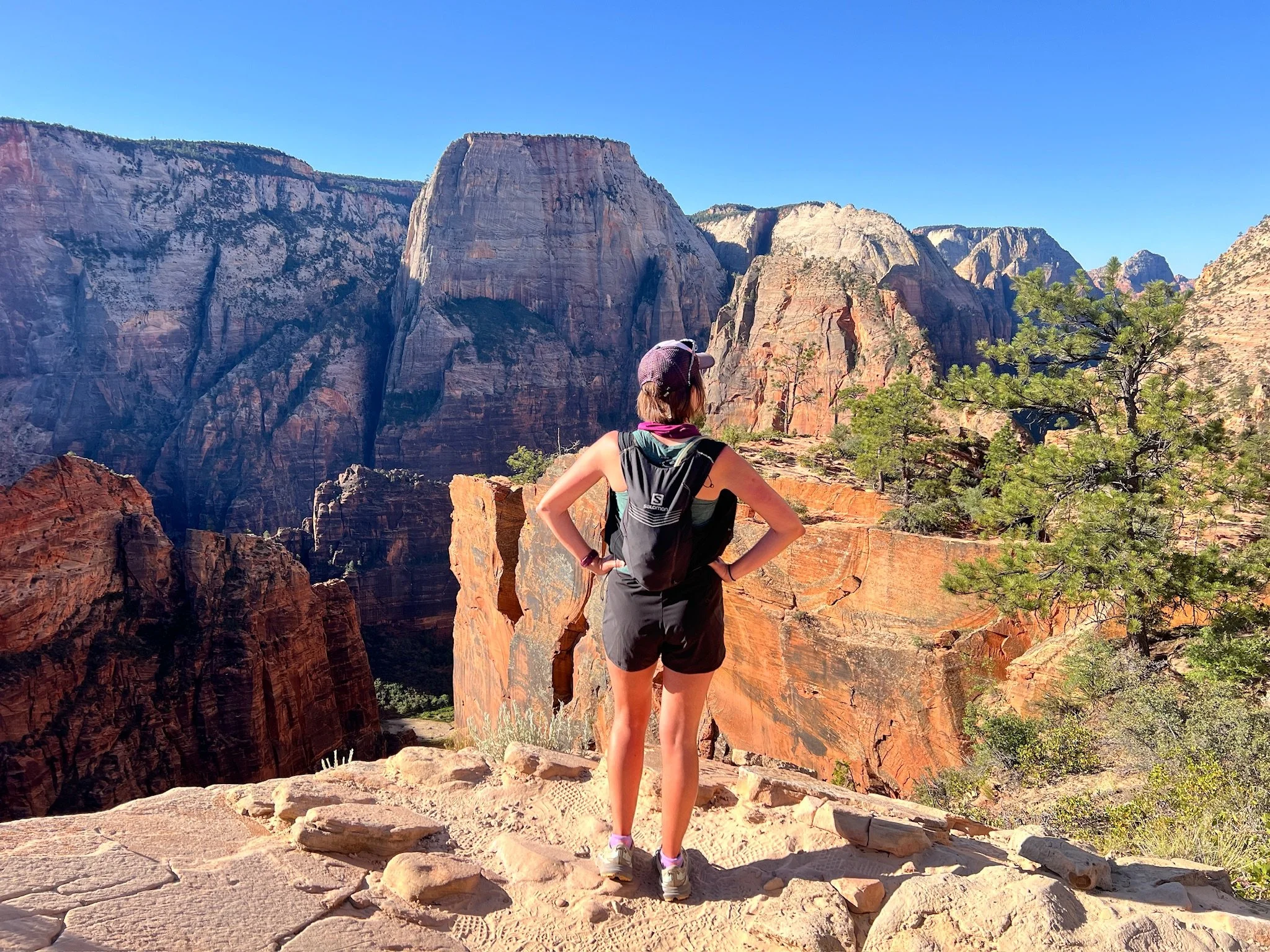
I have a confession, though – I love climbing and could walk uphill all day, especially first thing in the morning in a beautiful place with great people.
I am not a “fast” runner (fast is relative, I know), but endless uphill climbs are where I shine as an athlete.
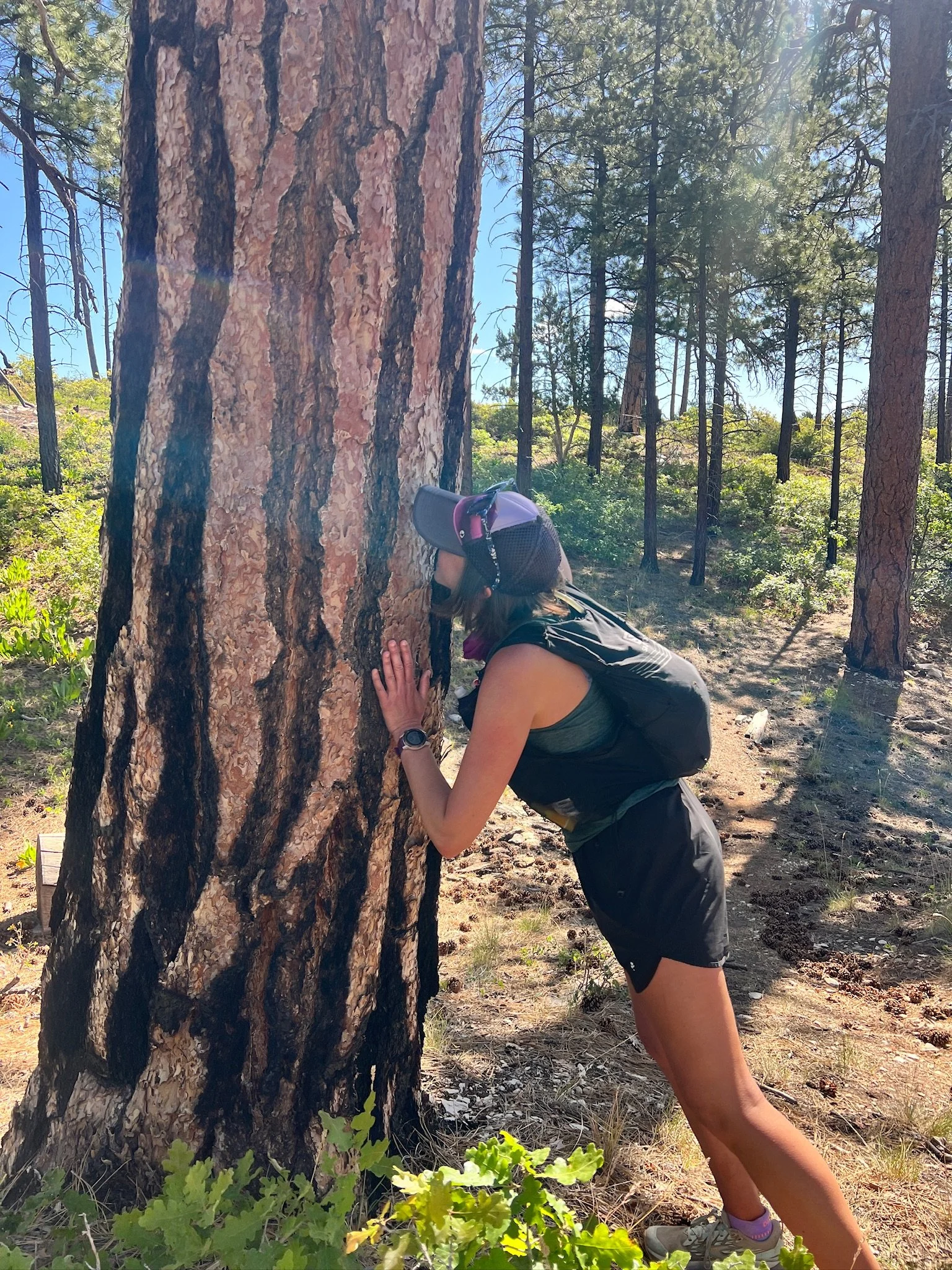
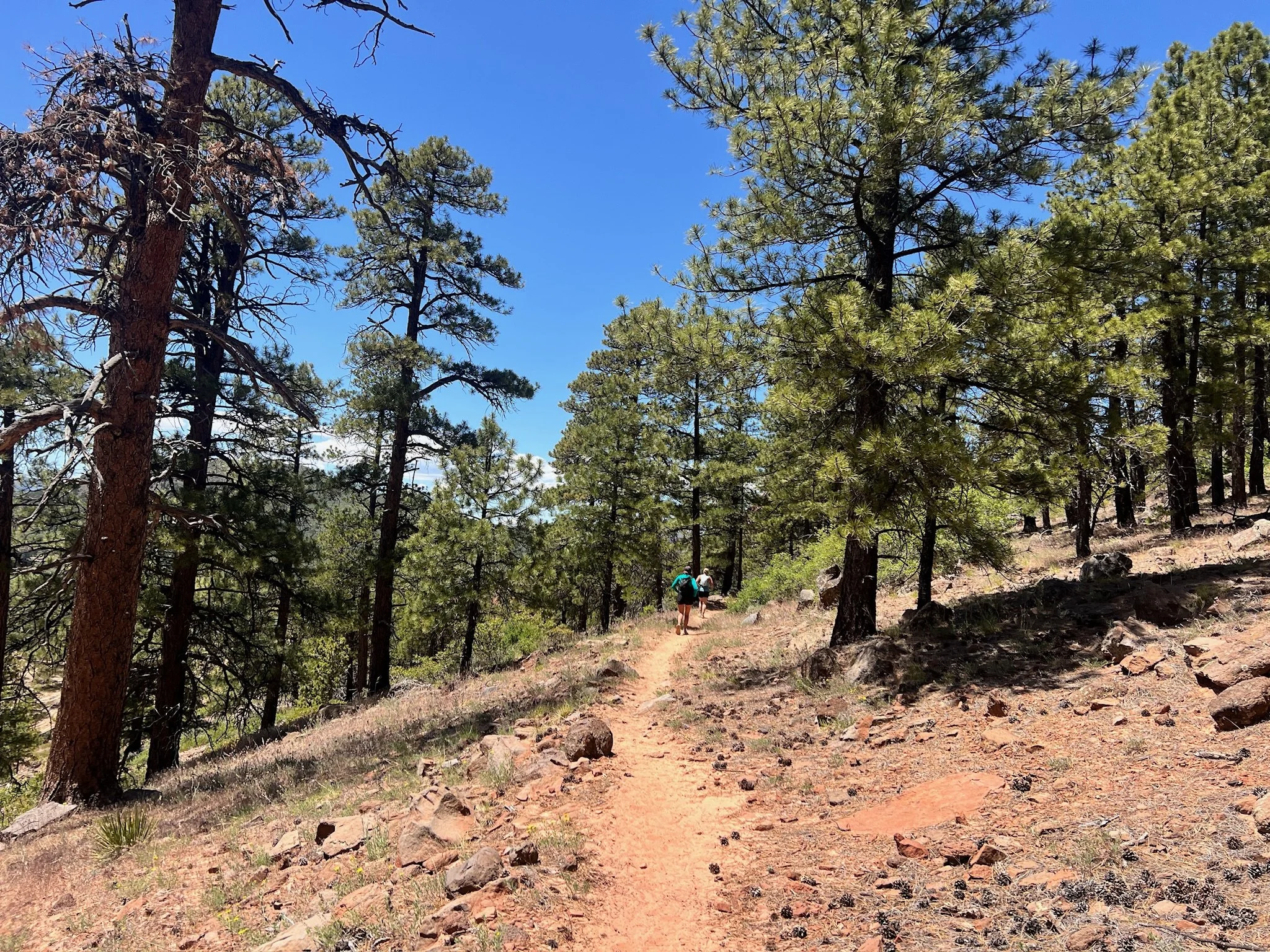
The trail passes the turnoff for Angel’s Landing (which notably had only a few hikers at that hour, thanks to the new permit system from NPS), and continues westward. The views for the next six miles or so were outstanding – sweeping views of the canyons and mesas that make Zion such a unique and fascinating place. We stopped repeatedly to take in the views. This is why I love self-supported adventures versus races: there’s no time pressure, and slower is better. I was delighted to find some ponderosa pines along the way, the bark of which smells like warm vanilla.
We saw a handful of backpackers throughout the day. As a woman in the outdoors, I sometimes field asshat comments from other people. Everyone we met in those middle miles were so incredibly kind and supportive, cheering us on and offering words of encouragement. It was a great reminder of how even a fleeting moment of kindness can have a significant impact on another person, and I let these interactions buoy my spirits.
The trail continued on through a long stretch of high desert forest, descending gradually. This made for many miles of pleasant downhill running, even when the cushy singletrack transitioned into sand. I began to feel the effects of the heat of the day as we approached the Hop Valley trailhead, which is where we had cached water the day before. We took a long break at Hop Valley, cooling off in the shade and rehydrating. I was able to get some calories in, but had started to lose my appetite at this point (likely from dehydration).
This is where it got interesting
Leaving the Hop Valley trailhead, we entered the alleged 6.5 mile “sand zone,” which we learned would be closer to 8 or 9 in totality.
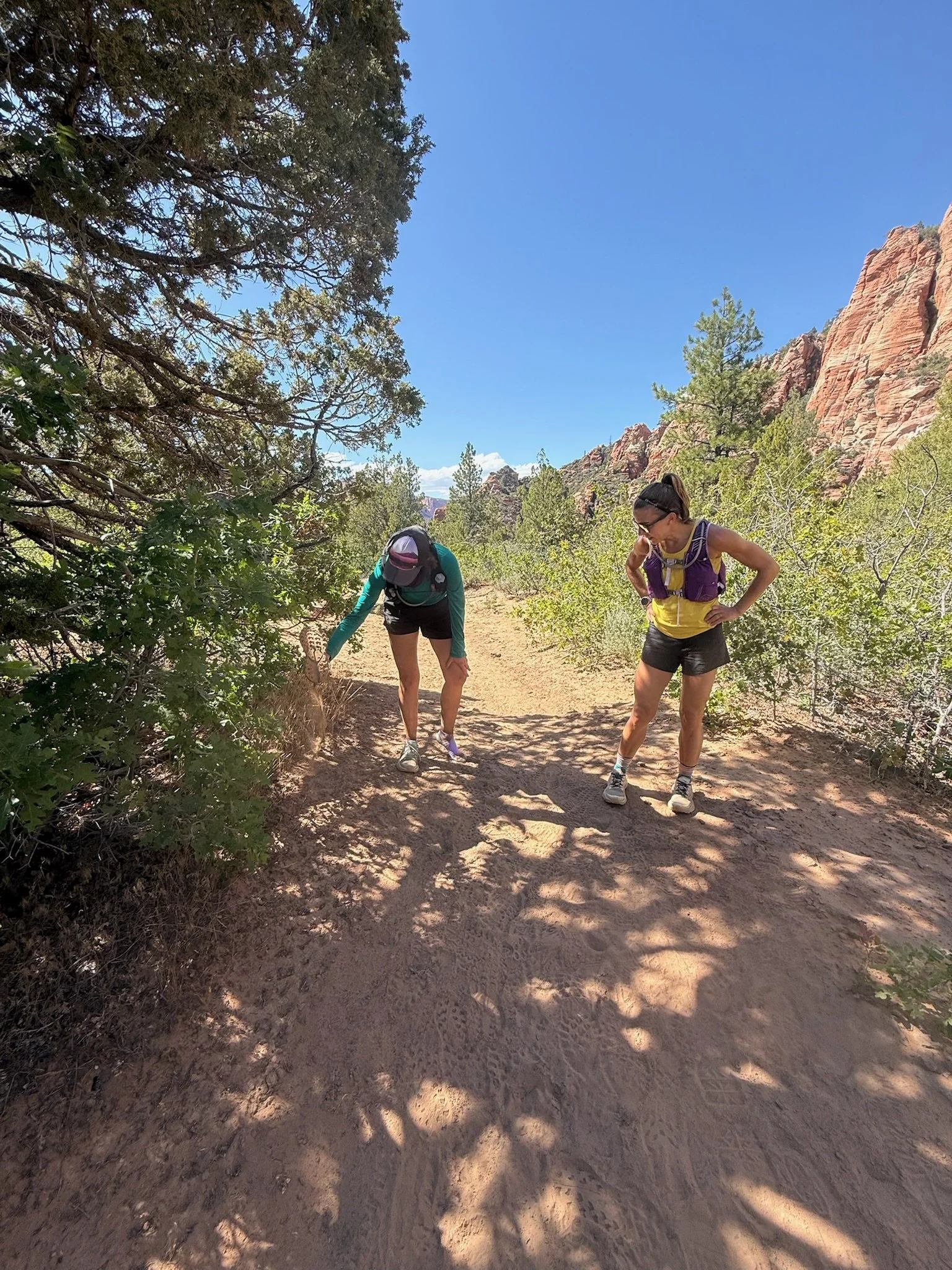
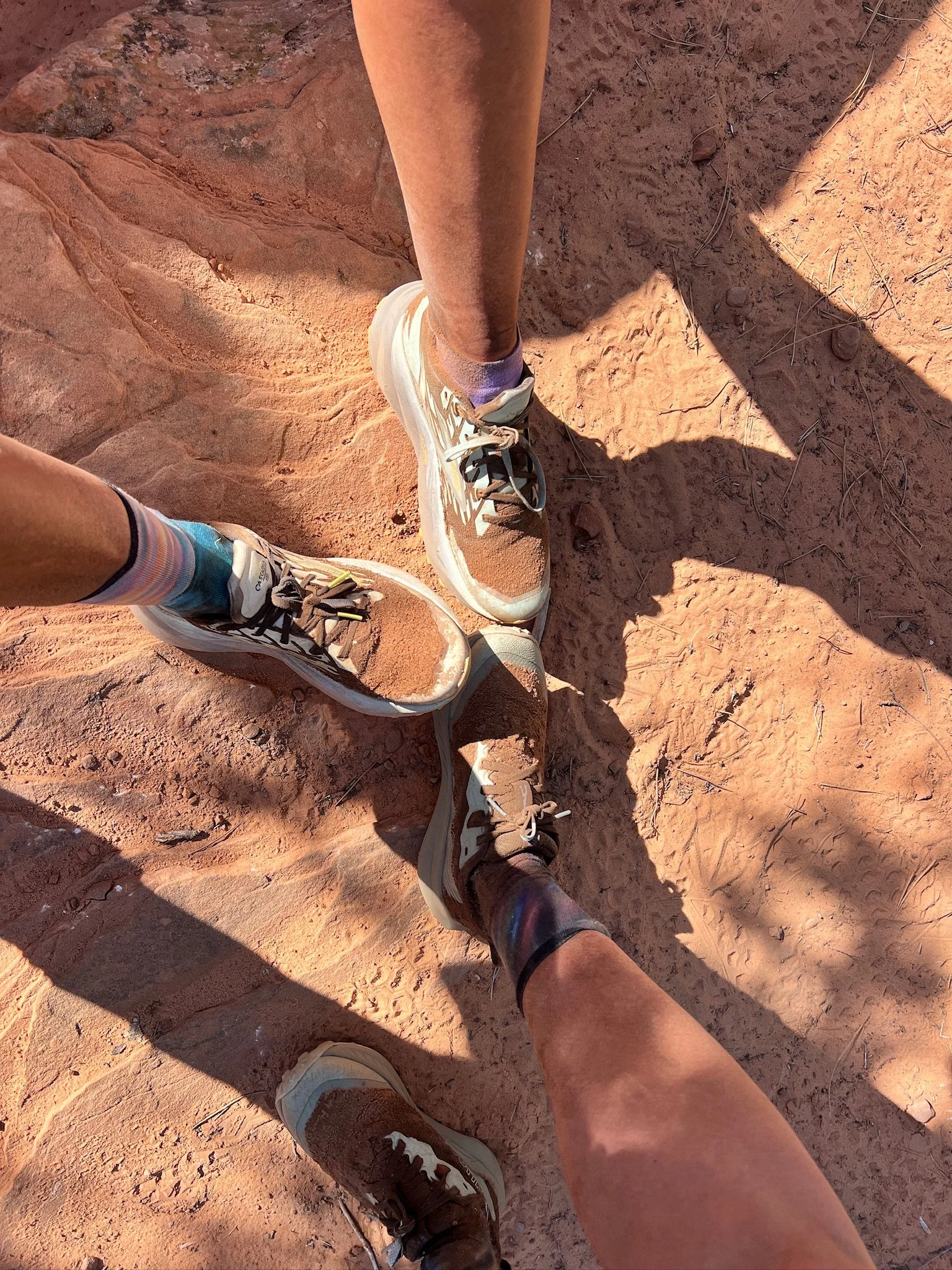
The sand was as fine as talcum powder and immediately poured into all sides of the mesh on my shoes. I stopped once to dump them out, but they immediately filled back up again.
“Whatever, I’ll just have sandy feet,” I thought to myself.
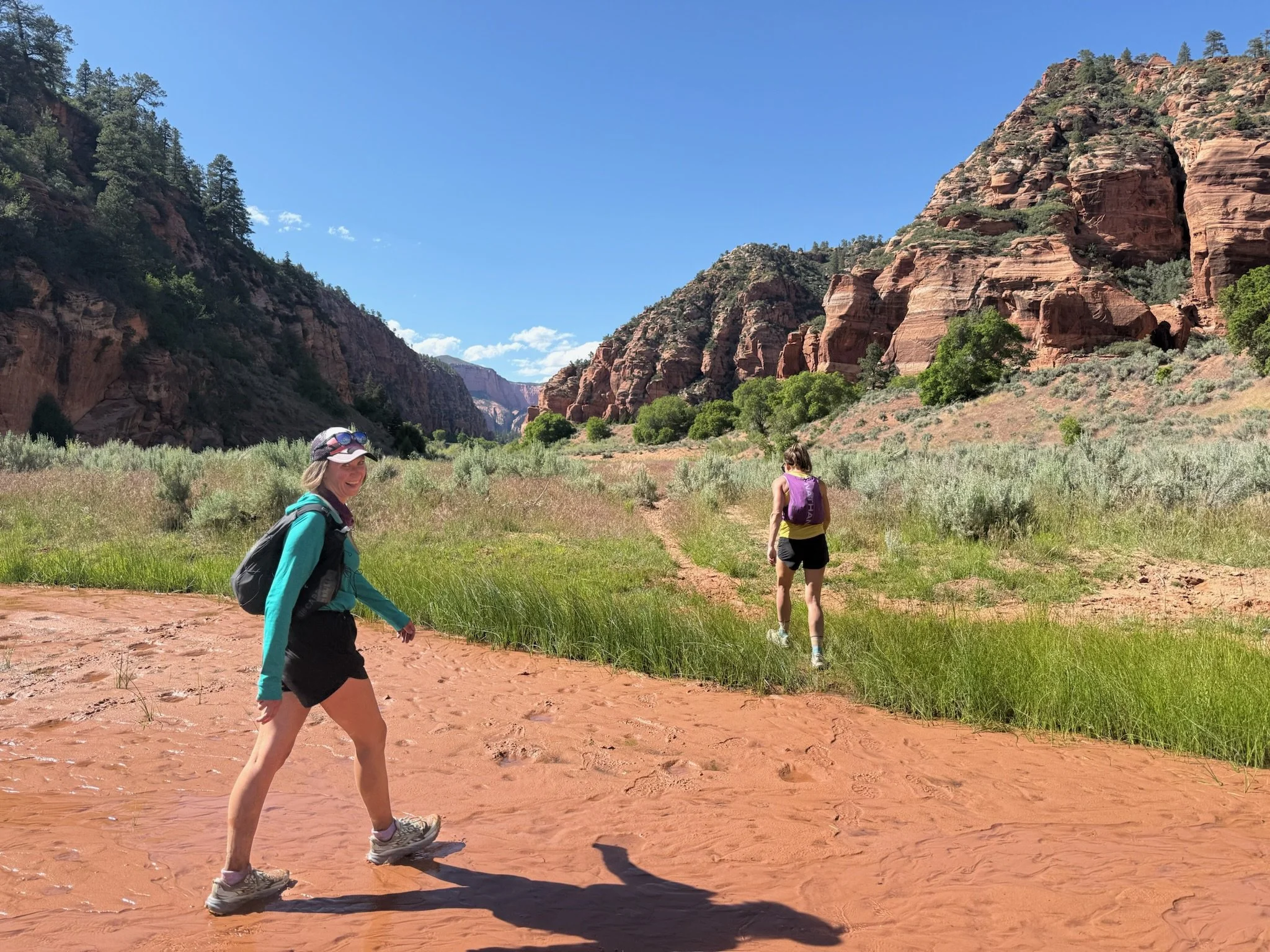
We were able to run on the downhill sections, but the effort in the deep, powder-fine sand was so extreme on the uphills/flats that it felt more efficient to hike. We then entered a 2.5 mile stretch of trail that’s shared with free-range cattle. There were multiple shallow creek crossings that were full of thick, gloopy, green algae and piles of cow sh*t. While there began to be more sections of shade, the sun still felt baking hot.
“This is cow hell,” said Lauren.
My feet were soaked, and the sand in my shoes and socks was now converted to heavy, wet sand. It caked both feet (inside and outside of my socks), and in between each toe. It felt like I was running with ankle weights. But on the plus side, free pedicure!
I thought back to the training runs I did in preparation for this adventure. My friend Jess and I had done a 16-mile route earlier this spring that involved about 12 miles of slushy snow up and down steep terrain. The run felt so challenging at the time, and I remember feeling wrecked at the end.
Compared to our current reality of cow hell, that route now seemed like such a walk in the park. I suppose that’s why I love tackling these grueling adventures – it raises the bar for what feels hard.
For the rest of my life, I’ll compare everything to cow hell. If it’s not multiple miles of sandy cow algae feet while dehydrated and hot, it simply can’t be that bad.
Eventually, we made it to our final water source of the day (Beatty Spring, which was flowing strongly) – which allegedly marked the end of the sand leg, although the damn sand did continue onwards for another mile or two. I rinsed my feet off in the creek and we filtered water from the spring. We chatted with backpackers, who let us know we would be “in for a treat” in the final stretch, although we could not discern if this was serious or sarcasm.
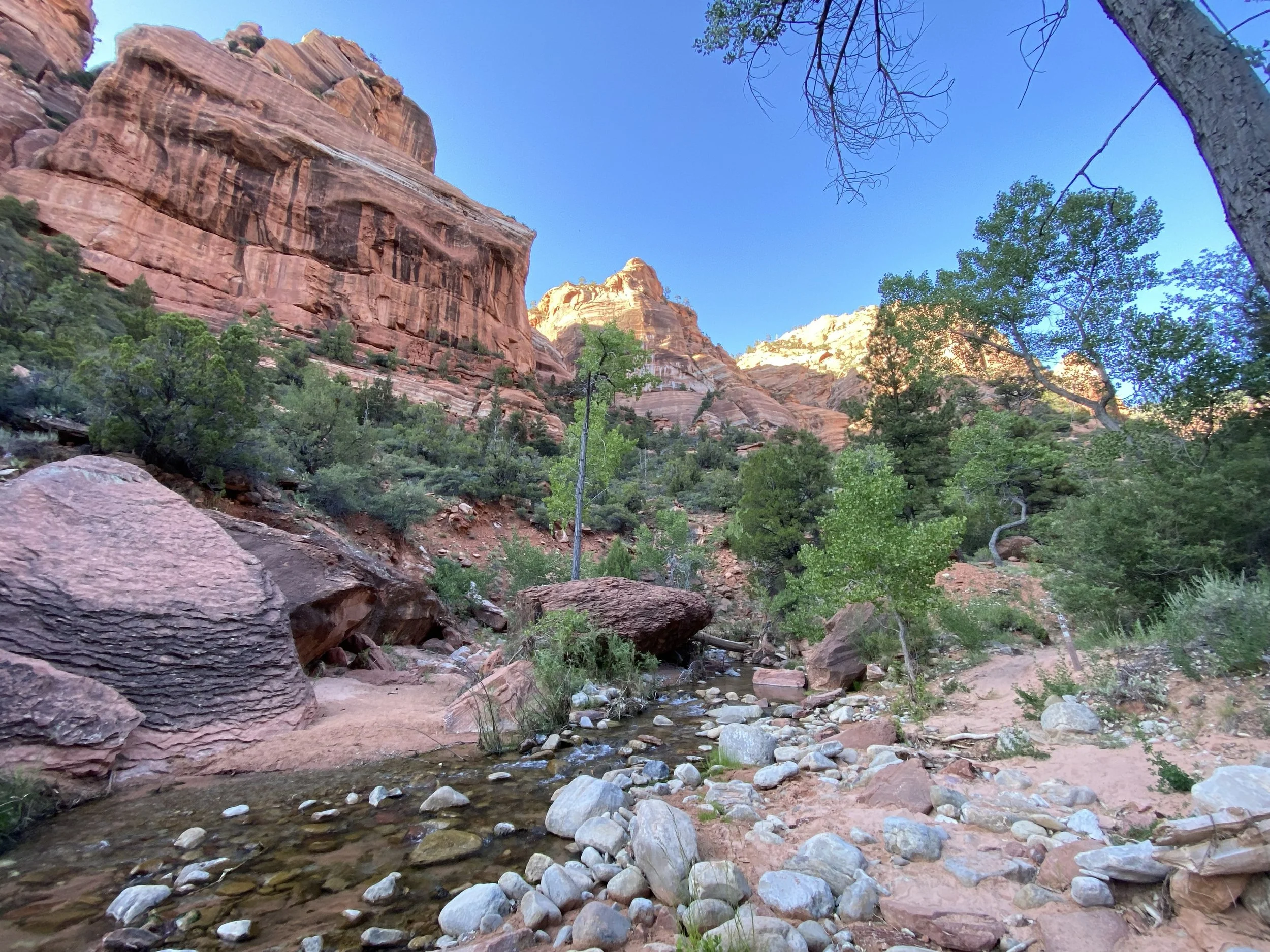
Beatty Spring was a desert oasis!
The final push
The vibes were high as we left Beatty Spring for the final 7 miles. The evening light illuminated the canyon walls in incomprehensible beautiful ways. As the miles ticked on, we distracted ourselves with open-ended questions about memorable race experiences, which interestingly centered around milestone events that involved being witnessed and championed wholeheartedly by family and friends. The conversation eventually petered out and we fell into companionable silence as we walked the uphill sections and ran the flats and downhills.
As is often the case during these big adventures when things get hard, I became fascinated by my own thoughts. I reflected for a long time on what I recently heard superstar ultrarunner (and winner of the 2026 Cocodona 250 mile race) Rachel Entrekin say in a podcast about what it means to live your values when sh*t hits the fan. She said something along the lines of how easy it is to be a nice person when you feel good and life is going well, but what about when you feel awful? What kind of person do you want to be in those moments, whether that’s suffering that you’ve chosen (hobbling through hours of sand in cow hell?) or suffering that you haven’t chosen (grief)? What then?
My feet felt pulverized, my stomach was a tender balloon (I had long since lost my appetite), fatigue pulsed through my body, and my head throbbed with dehydration. “Here’s the true test,” I thought to myself. My mind fixated on the body sensations that didn’t feel so well, yet I was able to see them clearly for what they were: feelings of discomfort. That’s all it needed to be. My feet can hurt, and I can keep going. Attaching meaning, judgment, or blame to the sensation would just make me feel worse. It’s just tender, pulverized feet, not a reflection on my worth as an athlete or value as a human.
It’s taken many, many years of practice at this, and I don’t always get it right, but I finally nailed “noticing without judgment” in that final mile.
In a world that tells you it’s not acceptable to feel uncomfortable even for one minute, what does it mean to embrace discomfort?
“This is what we came for,” I exclaimed audibly. My friends reflected this back with cheers, repeating my words out loud as they echoed through the canyon.
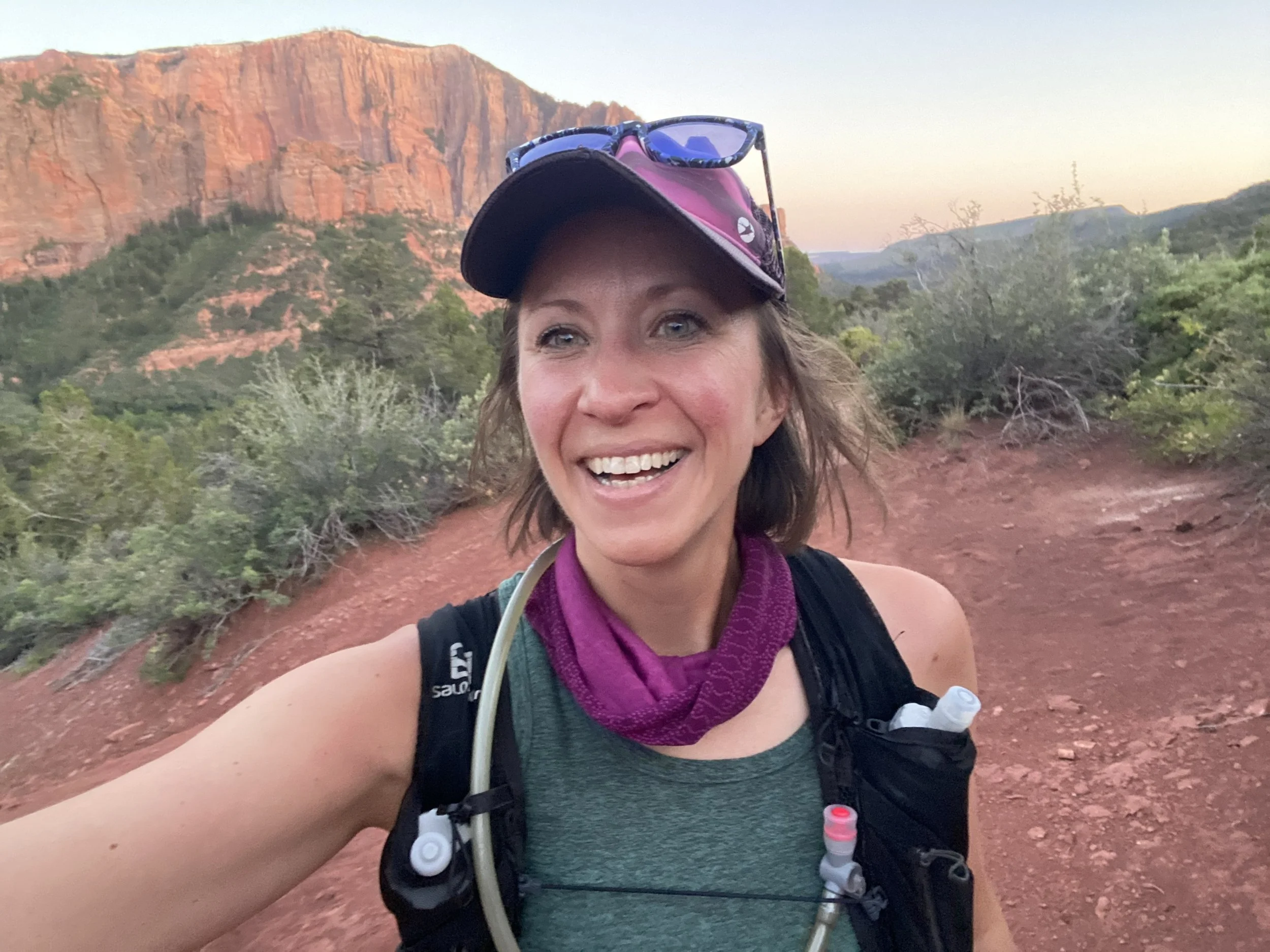
I paused to take a few selfies in the last quarter mile. You may look at this picture and see an exhausted, filthy, dehydrated middle-aged woman worn down by the elements in a brutal climate, but I look at this picture and see my truest self.
Hardy. Determined. Strong as hell. Buoyed by adventure. Living her values.
There’s a sparkle in my eyes that only appears after I’ve run for a very long time, after the layers of BS in my brain have been chiseled away. This is what I came for, and this is why I do hard things.
We continued pushing forward until our bright blue rental car came into view. As we took the final steps together, we let out cheers of relief and embraced each other in a group hug. It took us 13 total hours (11 hours moving time) to get across Zion. I came out of the desert that night a stronger, better version of myself, and forever changed by the journey.
Total Stats
Miles (according to my Strava): 37.71
Elevation Gain: 6,427
Moving Time: 11:29 hours
Avg Pace: 18:17/mi
Elapsed Time: 13:23 hours
Water Fills: 3 (Wildcat Spring - slow trickle as of 5/31/26), Hop Valley trailhead (water cache), Beatty Spring (strong flow as of 5/31/26)
Best Snack: Rice chipsie treat (basically a rice krispie treat but with chips instead of rice krispies)
Read More
I Left Public Service to Start a Therapy Private Practice: What My First Year Has Taught me
The Psychology of Endurance Sports
Recovering from a Running Injury: Trusting the Process and Letting Go of Control
Author Bio
Dr. Annie Mueller is a licensed clinical psychologist and founder of Summerland Psychology, a private practice serving adults in Washington and PSYPACT states via telehealth. Her work focuses on anxiety, depression, trauma, life transitions, and supporting athletes and high-performing individuals. She started Summerland Psychology because she knows firsthand that the people who voluntarily run 38 miles through cow hell and sand are often the same ones who need a therapist who won't flinch at hard things, and who understands why you'd choose suffering on purpose.
Ready to raise the bar for what feels hard, whether on or off trail? Let’s talk.